
Customer Experience Trends Canadian Organizations Should Watch
Customer expectations are changing rapidly across Canada, and organizations are now focusing more on delivering personalized, smooth, and engaging customer experiences. Whether it is retail, healthcare, banking, education, technology, or professional services, businesses are realizing that customer experience (CX) has become one of the most important factors for long-term growth and customer retention. Canadian consumers today expect fast support, digital convenience, personalized communication, and consistent service across every platform. Companies that fail to meet these expectations may struggle to maintain customer loyalty in an increasingly competitive market.
As digital transformation continues to grow in Canada, organizations are adopting modern CX strategies powered by artificial intelligence, automation, analytics, and omnichannel communication systems. Businesses are not only focusing on selling products or services but also on creating positive customer journeys that improve satisfaction and trust. Understanding the latest customer experience trends can help Canadian organizations stay ahead of competitors and build stronger customer relationships.
Performance dashboards and Key Performance Indicators (KPIs) are widely used by businesses, government organizations, healthcare providers, educational institutions, and many other industries. They simplify complex information and present it in a visual format that is easier to understand and analyze.
Understanding the difference between market research and customer feedback is important for organizations that want to make informed business decisions, improve customer experiences, and build long-term growth strategies. Both approaches are valuable, but they are used at different stages of business planning and customer engagement.
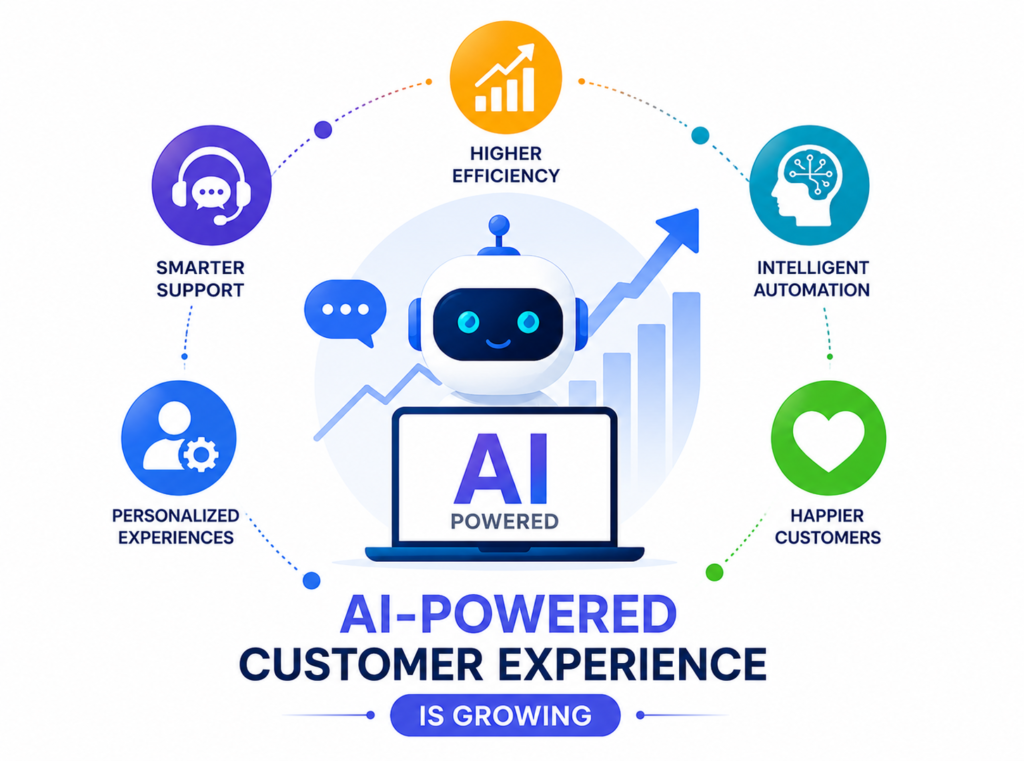
AI-Powered Customer Experience is Growing
Artificial Intelligence (AI) is becoming a major part of customer experience management in Canada. Organizations are using AI tools to improve customer interactions, provide faster support, and deliver personalized recommendations. AI-powered chatbots, virtual assistants, and automated response systems are helping businesses provide 24/7 customer service without long waiting times.
Canadian businesses are also using AI analytics to understand customer behavior, buying patterns, and preferences. This allows organizations to create targeted marketing campaigns and customized experiences for individual customers. AI-driven personalization improves customer engagement and increases customer satisfaction because consumers feel that businesses understand their needs.
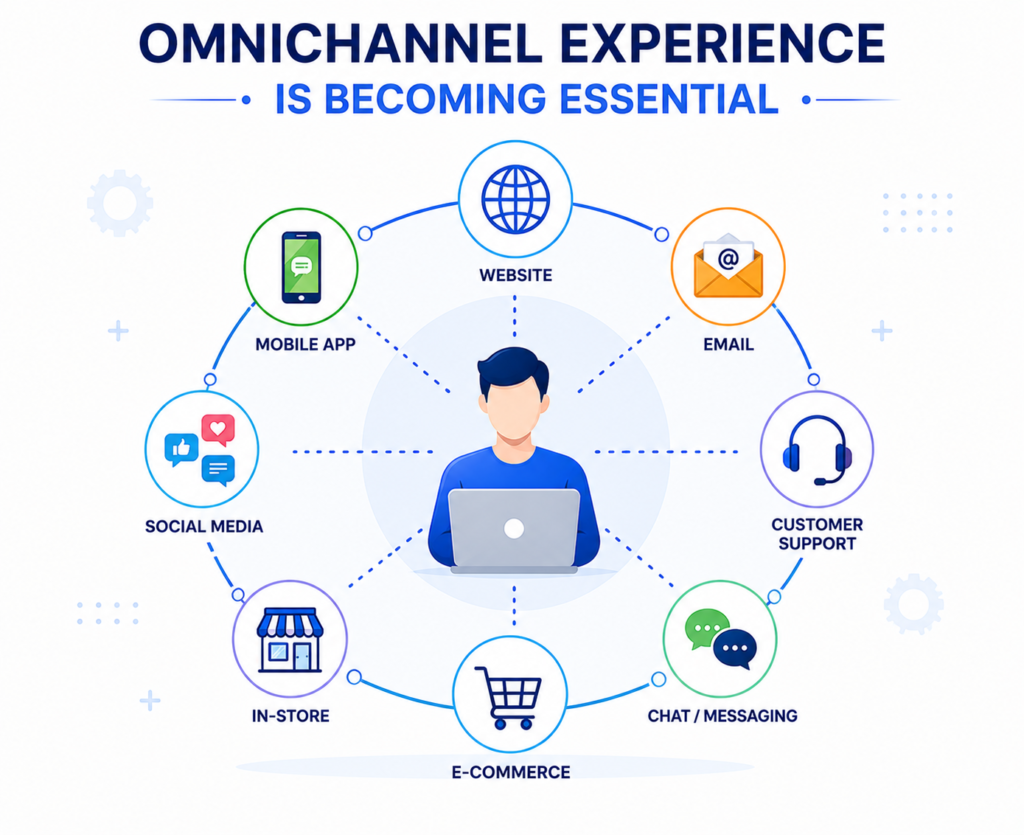
Omnichannel Experience is Becoming Essential
Customers now interact with businesses through multiple channels, including websites, mobile apps, social media, email, phone calls, and live chat. Canadian organizations are focusing on creating seamless omnichannel experiences where customers can switch between platforms without losing continuity.
For example, a customer may begin a conversation through social media and later continue it through email or live chat. Businesses that provide consistent communication and support across all channels create a smoother customer journey. Omnichannel strategies also help companies improve customer trust and brand loyalty because customers receive the same quality of service everywhere.
Organizations in Canada are investing in integrated CRM systems and communication platforms to manage customer interactions more efficiently across different channels.
Personalization is Becoming More Important
Modern customers expect businesses to provide personalized experiences instead of generic communication. Canadian organizations are increasingly using customer data and analytics to deliver personalized recommendations, targeted offers, and customized communication.
Personalization can include:
- 1. Personalized product recommendations
- 2. Customized email campaigns
- 3, Tailored promotions and discounts
- 4 Personalized customer support
- 5. Location-based services
Customers are more likely to engage with businesses that provide relevant content and offers based on their interests and behavior. Personalization not only improves customer satisfaction but also increases conversion rates and repeat purchases.
Data Privacy and Customer Trust are Key Priorities
Canadian consumers are becoming more aware of data privacy and cybersecurity issues. Organizations must ensure that customer information is collected, stored, and managed securely. Businesses that fail to protect customer data may face legal issues, financial losses, and reputational damage.
Transparency is becoming a critical part of customer experience. Customers want to know how their data is being used and whether their privacy is protected. Canadian organizations are now investing in stronger cybersecurity systems, secure payment gateways, and transparent privacy policies to maintain customer trust.
Businesses that prioritize data protection and ethical use of customer information are more likely to build long-term relationships with consumers.
Self-Service Solutions are Increasing
Many customers now prefer solving simple issues themselves instead of contacting support teams. As a result, Canadian organizations are investing in self-service customer experience solutions such as:
- 1. Knowledge bases
- 2. FAQ sections
- 3. AI chatbots
- 4. Customer portals
- 5. Video tutorials
- 6. Automated troubleshooting systems
Self-service options allow customers to find answers quickly and conveniently. This not only improves customer satisfaction but also reduces operational costs for businesses by lowering support workloads.
Organizations that provide easy-to-use self-service platforms can improve customer convenience and overall user experience.
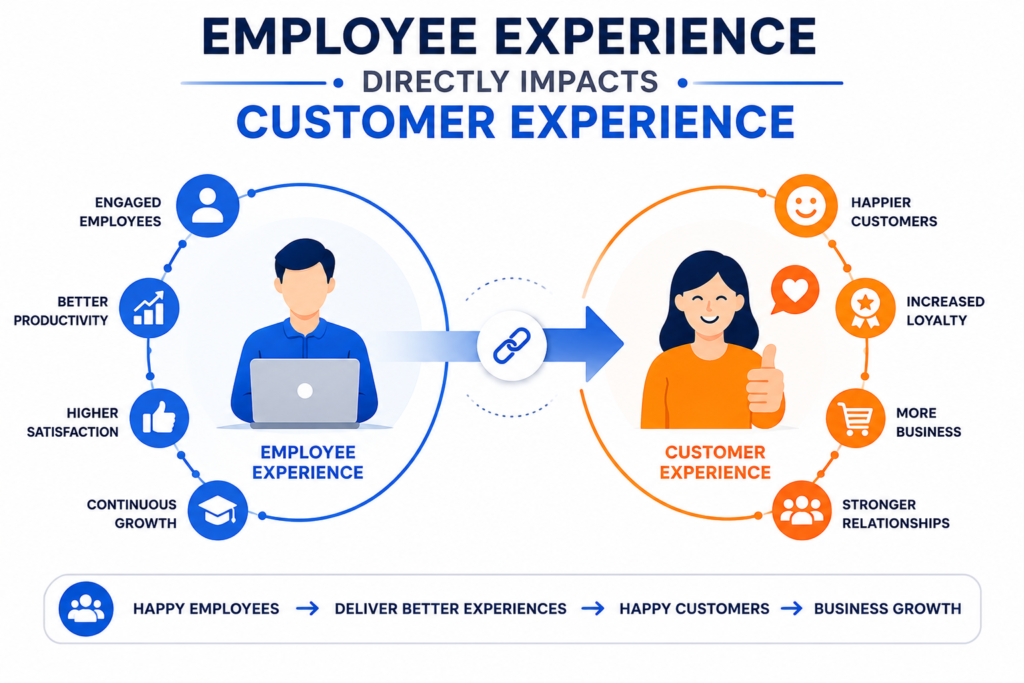
Employee Experience Directly Impacts Customer Experience
Canadian businesses are increasingly recognizing the connection between employee experience and customer satisfaction. Employees who feel supported, motivated, and engaged are more likely to provide better customer service.
Organizations are focusing on employee training, workplace flexibility, mental wellness programs, and digital tools that help employees work more efficiently. Customer-facing staff members play a major role in shaping customer perceptions, making employee experience a critical part of CX strategy.
Businesses that invest in employee development and workplace culture often see improvements in customer loyalty and service quality.
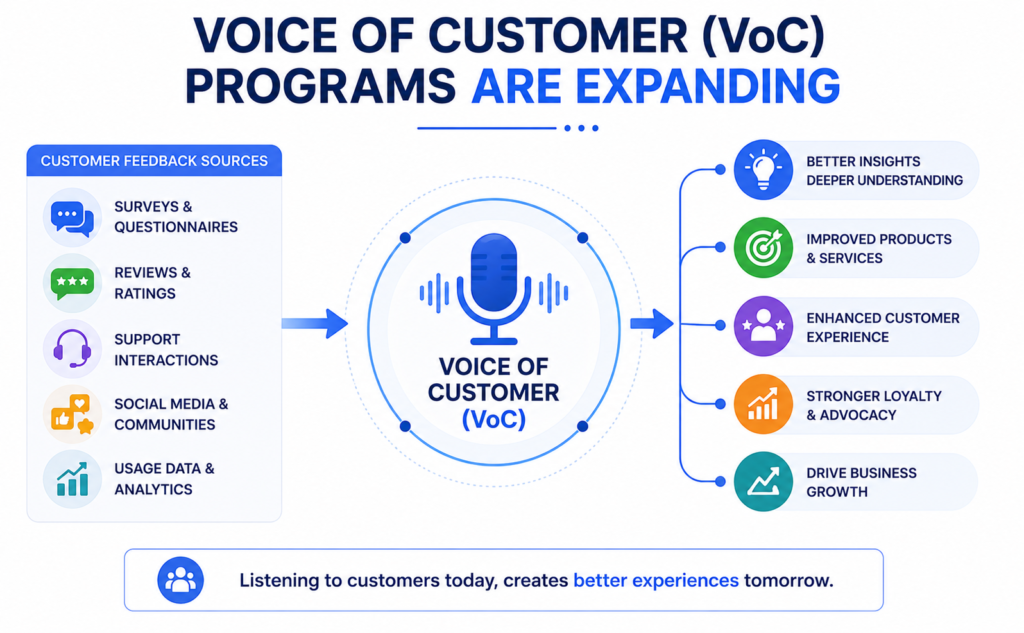
Voice of Customer (VoC) Programs are Expanding
Organizations in Canada are placing greater importance on customer feedback and insights. Voice of Customer (VoC) programs help businesses understand customer expectations, complaints, and satisfaction levels through surveys, reviews, social media monitoring, and direct feedback systems.
By analyzing customer feedback, businesses can identify problems, improve services, and make data-driven decisions. Companies that actively listen to customer opinions can respond more effectively to changing market demands.
VoC programs also help organizations measure customer satisfaction and identify areas where customer experiences can be improved.
Sustainability and Ethical Practices Influence Customer Decisions
Canadian consumers are becoming more socially and environmentally conscious. Customers increasingly prefer businesses that demonstrate sustainability, ethical sourcing, diversity, and social responsibility.
Organizations are now incorporating sustainability initiatives into their customer experience strategies. Businesses that communicate their environmental efforts, ethical business practices, and community involvement often create stronger emotional connections with customers.
Sustainability is no longer only a corporate responsibility issue; it has become an important factor influencing customer loyalty and purchasing decisions.
Conclusion
Customer experience is rapidly evolving across Canada, and organizations must adapt to changing consumer expectations to remain competitive. Trends such as AI-driven personalization, omnichannel communication, self-service platforms, data privacy, customer feedback programs, and sustainability are shaping the future of customer experience management.
Canadian businesses that focus on delivering seamless, personalized, and trustworthy experiences are more likely to improve customer satisfaction, strengthen brand loyalty, and achieve long-term growth. As technology and consumer behavior continue to evolve, organizations that stay updated with emerging CX trends will be better prepared to build meaningful relationships with their customers and succeed in the modern business environment.
